Friday, December 1, 2023

Conventions of 2023: AnimeNYC + Yearly Convention Wrap-Up

Aka “Superjustinbros Goes to New York City: Part 2”.


After only five weeks since the conclusion of New York Comic Con, the Javits Center in Manhattan would once again fill up with crowds of people as the sixth ever AnimeNYC would commence for the entire weekend, from Friday to Sunday. It was an event that I was highly anticipating since around the end of AnimeNext five months prior, and when the time came to attend it, it was an event that satisfied me with a great selection of artists, cosplays, and panels to check out, but at the same time it also left me with conflicting thoughts, and now that I’ve had the time to recover from the event I think I’m in a good place to discuss how AnimeNYC 2023 went as a whole and how it compares to both prior iterations of the event, as well as other conventions I’ve attended this year.


Before the first day of the event, AnimeNYC’s social media accounts announced some big changes that would go into the event effective the next year: The event would be ditching its mid-November timeslot that it’s held onto since 2017 in favor of moving the event to August, allowing it to use the entirety of the event space like New York Conic Con does. As an event that has only grown and become bigger over time, I’d say it needs the increased amount of space, and one look at my thoughts of this year’s event may clue you in as to why. That said, while I am confident that the shift in schedule will result in bigger and better things for AnimeNYC, this means the event lands in the middle of an already packed month (or perhaps, an already packed season) when it comes to conventions, including Otakon and the Long Island Retro Gaming Expo, compared to its former home of November where it could stand out on its own as one of the last conventions of the fall season in a time where not many of them occur with the approaching holidays and such.


Anyways, the event.


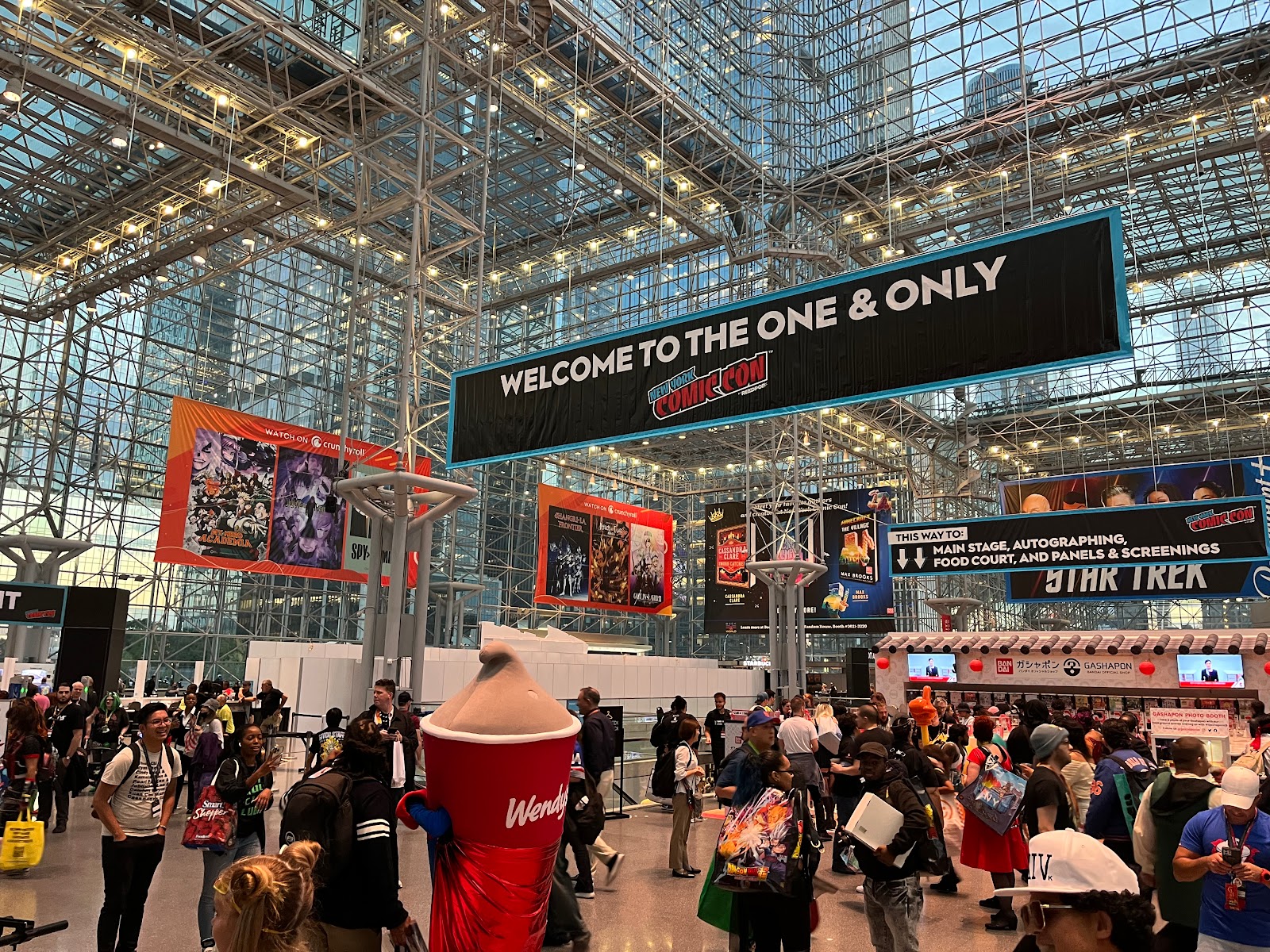
If you’ve attended AnimeNYC in 2022, then the layout should be very familiar: The vendors and artists all combined into one exhibition hall, panel rooms down in the lowest floors, and hangout/dining areas all in the central lobby. The weather was rather cloudy at first as a rainstorm had passed through very early in the morning, but as the con went on, the sun would slowly emerge before finally setting in the afternoon. After 10am, the lobby was filled with attendees and cosplayers flooding in from a waiting queue outside, and the place was filled very quickly. The resulting crowds were thankfully manageable and I could walk around without worry of bumping into too many people, but the Artist’s Alley ended up with a few big crowds during the time I spent in there. Thankfully, it never got to the level of NYCC 2022 unbearable, but it still made trying to navigate through the artist’s alley to find artists a hassle, and by the end I spent more time in there than I was willing to admit from having to brave crowds, chat with artists, and acquire some swag from their booths. By the point 6:00 pm rolled around, right as the big crowds through Artist’s Alley faded, I was finished with the section, said my goodbyes, and left, without even bothering to hold further chats with certain artists I had known for years since my first foray into attending conventions. Still, I had a great time meeting and supporting everyone in the Artist’s Alley and I exited the event with a nice haul of commissions, even if some had to be saved till after the event as they couldn’t be done on time.


The Vendors’ Hall was, in direct contrast, another story. Unlike last year, there weren’t really much in the way of giant set pieces save for a few booths in the front, with most of them instead at NYCC the past month to grace that event’s vendors. No big inflatable Goku or Luffy, no giant set of Bandai Namco shops, no IntI Creates store, and no dedicated space for Gundam. Instead we got… a booth for the US military(?)… and GFuel…(???) …Yeah, I’ll kindly decline. Even miHoYo, which had a booth for Genshin Impact last year and currently has their IP’s all over artist alleys thanks to their loving fan base didn’t return this year with a booth to promote Honkai: Star Rail. Then again I’m not one to gush over gacha games, and thus the Fate and NIKKI booths, which were featured pretty prominently in announcements, completely passed me by. The former was doing their annual live shows in front of the entrance gate and the latter had a shootout attraction with plastic replica guns. Viz Media and a few streaming services had booths to advertise and sell their products and I did manage to get some… rather silly pics at the Jojo World booth and a photo-op for Toilet-Bound Hanako-Kun a floor higher. Other than that, there’s not much else to say about the vendors; it’s realistically as good as a vendor’s hall could get at an anime convention without going overboard on the budget like at New York Comic Con, but when you compare it to other anime conventions, it’s probably one of, if not the best vendor’s hall of the anime conventions I attend each year (although that feels unfair for Castle Point Anime Convention, given its limited event space in comparison).


Panels and cosplays, a trademark of every good convention, were also a big part of this event. You’ll have to take the words of others on how good the panels were, as I got too preoccupied with touring the event space (especially the artist’s alley) to go and attend one. I did eye up the Gurren Lagann + Kill la Kill Anniversary Event, especially the news that Gurren Lagann would be coming to theaters in the US early next year for a limited time. There was also a very big Undead Unluck panel, but it was one of the year’s panels that required a reservation to attend so I didn’t exactly consider it. And then there was the cosplays. Just… wow; the cosplayers here COOKED with their cosplays of choice and I couldn’t have been any happier. Seeing the likes of Jet Set Radio and Guilty Gear in the sea of miHoYo cosplays and the continued popularity of One Piece and Jojo characters being represented in cosplay form was a pleasant delight. It was perhaps the best part of the event next to the artist’s alley and what made me end up pulling off a 17k walking marathon through the Javits center. I’m glad I was able to snap so many and that the artist’s alley didn’t have AnimeNext’s super-strict policies against photos in the artist’s alley, but I think going forward for future anime cons there won’t be as large of a gallery of cosplay photos as there ended up being this time, considering that by the closure of the vendors and artists I was just snapping away at whatever cosplays I could. I wouldn’t call it my number 1 focus of the event, but I guess after my last set of cosplay photos from five months ago, I was hungry to see more, especially in an area as large as New York City.


Anyways, the trends:


  • I didn’t seem to notice as many Genshin Impact cosplays as I did in 2022, with most of the franchise’s representation being in Artist Alley. It still had a strong showing in representation in cosplays, but I think with so many conventions with it as the “top dog” across last year and earlier this year, I noticed a small drop-off in Genshin cosplayers. The franchise still had an iron grip on the Artist’s Alley
  • Bleach continued to rise steadily in cosplay representation, certainly thanks to the return of the anime to finally adapt the Thousand Year Blood War Arc.
  • The rest of the big names in cosplay came from other Shonen Jump properties, with One Piece and My Hero Academia still being very prominent amongst the cosplays. Jojo’s Bizarre Adventure was also everywhere— I saw several DIO on the show floor and a few Jolene’s
  • Speaking of Shonen Jump, Demon Slayer, Chainsaw Man, and Jujutsu Kaisen were not too far off, and even Naruto got a few solid cosplays out on the show floor. Even One Punch Man got a couple.
  • I of course mentioned the group of Jet Set Radio cosplayers in the previous paragraph, but there were also some Guilty Gear cosplayers I ran into in the Artist’s Alley. Being able to see fighting games in an environment where they once weren’t commonplace, especially when one of them was a Potemkin cosplay. It’s not so much of a trend as it is an honorable mention. There were even a few artist booths dedicated to, or otherwise mostly featuring, fighting games.
  • Another honorable mention was Fairy Tail, with a few Natsus and Erzas. Of course pink hair is very hard to pull off so the cosplayers stuck with magenta/burgundy hair.
  • While I pointed it out when I covered AnimeNext, the biggest surprise of the event’s cosplays was Trigun rising out from the ashes. There were multiple cosplays of Vash the Stampede plus some of its other major characters; and in the Artist’s Alley there were enough artists with merchandise of the series that they had a Trigun stamp rally.


After getting home and going through my gallery of cosplay snaps, followed by signaling out all the duplicates I took in order to pick the best choices, the final tally was 199 cosplay photos. The number caught me by surprise since it was the same exact number of photos I had accumulated at last year’s AnimeNYC. Will the number ever be topped? Honestly I’m not sure—as much as I love cosplays at anime conventions I’d rather not let them consume my entire trip there, since I attend anime conventions for the artist’s alleys, the social experiences, and (occasionally) the panels, alongside the cosplays. Plus, the anime conventions have always given me the kinds of cosplay selections I enjoy since I started snapping cosplay pics at AnimeNext 2016, so it’s hard to ignore them.


Aside from the quintessential convention features; there was also an arcade in the back left corner of the vendors. Being an anime convention, it was loaded with the common selections of rhythm arcade games you expect at other anime-themed events, but thanks to the support of Psychic Drive, there were a healthy selection of non-rhythm games housed in candy cabinets to pick from as well, with fighting games and head-to-head puzzle games serving as their lineup. And incase you’re curious; there were no console games present, and much like AnimeNext, the game room closed along.


After nine hours, the vendors and artists closed, and after sticking around for an extra hour and a half to grab some last minute cosplays, I returned to my car and left, pondering about how the journey went and reflecting on the past several months of conventions since all the way back in Spring as I drove home. There was a lot that came on the mind but I’ll start with my final versify of AnimeNYC. In short, while I still think AnimeNYC 2019 and 2022 were my favorite years of the event (in spite of 2019 also having severe congestion in the artist’s alley, possibly mores than this year), this came very close to how 2022 went, with my only real regret for the event being the inability to tour the entire artist’s alley at a quicker pace while still finding time for other things at the event. Aside from that, it was a fun time, and I look forward to seeing how the event changes next year now that it’ll have access to more of the Javits Center to fit in everything in a convention that steadily gets bigger and bigger each year.


And that concludes my coverage on AnimeNYC, and by extension, the 2023 season of conventions. The convention commissions for AnimeNYC will be a bit late, but you can check out the cosplay gallery I’ve assembled at this link. And since this is the last event for a good while, I wanted to spend some extra time and chat about how the year went as an attendee for various conventions of different categories. To keep a long story short, this was honestly a very strong year and all the events have had their share of strengths and weaknesses. Of course, not all of them were big winners in the enjoyment factor but I came out of every event I attended this year with something to appreciate. Unfortunately, the fourth and final side event I had planned to attend, the Festival of Games, was dropped by the organizers for this year, though I heard there are plans to have a smaller swap meet until they try to have the event again in full for December 2024.


And for this year, I thought it’d be fun to rank each of the events I made a presence at, both on how I feel each event was handled given their scale and what I feel they could improve on, and how much I enjoyed them on a personal level. And so, without further hesitation, here’s where I stand on the con rankings of the main lineup based on their quality relative to the scale and budget they were given to work, and what they had to offer for that scale:


  1. New York Comic Con 2023
  2. AnimeNYC 2023
  3. Long Island Retro Gaming Expo 2023
  4. Castle Point Anime Convention 2023
  5. EternalCon 2023
  6. AnimeNext 2023


And here is where I would rate each event based on my own enjoyment factor and how much they kept me wanting for more:


  1. Long Island Retro Gaming Expo 2023
  2. AnimeNYC 2023
  3. Castle Point Anime Convention 2023
  4. New York Comic Con 2023
  5. AnimeNext 2023
  6. EternalCon 2023


I should point out that all of the entires on this list are very close to one another in terms of quality/enjoyment; and you may be surprised at how AnimeNext made the bottom of the list for the con rankings. While most of the conventions have had smaller issues and accidents, the move to a new venue really did a toll on AnimeNext and the decision to split the event into two separate venues only interconnected through a shuttle bus did not do it any favors. And while I loved going to EternalCon and it perhaps had the least hectic artist’s alley of all the main events, it suffered the most from having no seating opportunities unless you went out of your way and it’s something I want to see make stronger use of the venue it’s given, especially with the vendors’ hall. When it came to the side events, CradleCon, having access to a bigger venue, was the essential side event of the three that were able to take place in my home turf of Long Island. That’s not to say that EMCon and LITropicCon weren’t enjoyable; EMCon was still the perfect warmup event before Castle Point Anime Convention, and LITropicCon was a great way to socialize and catch up with several artists in the Artist’s Alley as there would be no other notable events on Long Island to attend due to the cancelation of Festival of Games.


So where do we go from here? Well, there’s a honest chance that 2024 will be more of the same, but with the schedule shift AnimeNYC will be going through starting next year, I may introduce some new events into my schedule, provided they can fit in and I’m able to withstand being on my feet for a few hours that day.


The first and most obvious choice is DerpyCon. I attended the event once in 2016 to a rather mixed result, and since then I’ve contemplated attending the event again but found it difficult to do so with two big mammoth conventions (NYCC and AnimeNYC) sandwiching it. Now with AnimeNYC moved up to August, it would be much easier to slot in Derpy Con as a new side event for the convention journey before the holidays start. On that merit, Cradle Con would likely get promoted to main event, since it had as much to do for a comic and art fan as LI Retro did for retro game fans, combined with its size and scale and how many commissions I were able to haul up from that event, with a total tally very close to the other, bigger comic and anime conventions I attend.


In terms of other comic and general pop culture events, Thy Geekdom Con and Brooklyn Comic Con come to mind, as I tried attending the former in 2022 following the cancelation of that year’s AnimeNext only to wind up not opting into the event at all, and since then it’s been on the mind whenever the beginning of the year drops. The latter only entered my mind after a friend of mine that I saw for the first time in years at AnimeNYC this year in the Artist’s Alley mentioned they were applying to be part of that event’s alley. However, both of them are very close to other events I already attend— Thy Geekdom is the week after Cradle Con, and Brooklyn Comic Con will likely end up the week before AnimeNext, if the dates of previous AnimeNext’s is any indication. There’s also Wintercon, though its stronger adult theming (including being set in a casino) and being much further disconnected from anime than NYCC draws me further away from possibly attending the event. If either of these events become a possibility, I would likely not stay for the full duration of a single day at each event since I do want to be able to rest and take a breather (and give my wallet a chance to recover).


I’ll wait till early next year before I come up with a concrete schedule on what I plan to attend (spoilers, it’ll mostly be a repeat of this year’s events). In the meantime, I’ll get up and on outta here since this blogpost has gone long enough. Thank you all for sticking with the convention coverages this year—the one convention per post format has really let me go all out on describing the events that bring me immense joy each year. I have a lot of things in the planning for 2024, since this year did not work out with all the leftover projects still hanging. Understandably, many of them will bleed into 2024, and once I’m all reeled back from the holiday prep, my goal will be to power through most of these leftover projects and venture out of the comfort zone for a change of scenery. While I’ve dropped hints of my plans in the past and on social media, I think I’ll leave it mostly up in the air from here on out.


I’ll likely have one more blogpost to close out the year, but until then, See You, Space Cowboys.


Tuesday, October 31, 2023

Conventions of 2023: New York Comic Con

Aka “Superjustinbros Goes to New York City: Part 1”.


Following a very eventful Summer season filled to the peak with events to attend (two big conventions, one smaller convention, a friend’s birthday party, and several different online events), I was finally able to scale back  my agenda as the season drew to a close. And then, in mid October, right as spooky season kicked off, New York Comic Con roared its head back into the limelight with guns blazing, continuing to stand as the largest pop culture event in the East Coast especially thanks to its long history and its hosting location of none other than the Javits Center in Manhattan. I attended the first day of the convention and stayed till closing.


Traditionally, NYCC was either the last, or second to last, traditional pop culture event that I attended, and while I will say I do enjoy them, it’s for entirely different reasons than most of the other events I attend. When you tally up all the events I make sure to attend each year, there’s two main events and three side events that all qualify under this moniker, regardless of how big they are. EMCon was something of a warm-up to the bigger events that followed later in the year, Cradle Con and EternalCon were both larger events that managed to carry the energy of NYCC but on a smaller scale, and Long Island Tropic Con was more lax with a venue that also wasn’t very large. And yet, it was the perfect type of event to end the season with after just how huge Long Island Retro Gaming Expo was. But of course, NYCC would be arriving soon, and I needed to prep.


You’ll recall last year that I came out of NYCC 2022 with a few regrets, namely, not getting to see all of the Artist’s Alley from just how clogged up it was with attendees that year. It seems the staff working at NYCC noticed this and, in response, slightly reduced the number of artist tables at the event to free up some of the congestion that plagued the artist’s alley all day. And thanks to that, it was much easier to maneuver around the main body of the artist’s alley without repeatedly bumping into or being slowed by the crowds. There were still professional artists hired to join the artist’s alley by their parent groups joining the selection of artists that had to pay to get into the event out of their own pockets, and it made the smaller artists that I usually look for in artist alleys a bit harder to spot. Nonetheless I still was able to get more out of the artist alley this year by virtue of planning it as my first destination and then saving the re-visit later in the day for before the main venue would close down for the night. There was indeed a commission haul but I decided to delay it since two of the commissions I ordered ended up getting delayed to post-convention dates, and since I don’t have a solid lead on when they’ll be done and delivered as of this post, I may end up doing the commission post on my other blog early next month without them since I’ll eventually need to post the AnimeNYC haul as well.


After the typical convention Artist Alley run, I made my way up to the vendors for the next few hours. On top of running into some familiar faces from the year prior selling their goods in the massive vendor’s hall, there were plenty of sights to observe and tons of collectibles to buy within the many booths of the event. And each year, I am once again surprised at just how much of a presence Japanese companies and their respective media franchises had at this event. Bandai brought many of their name brands to the show in some capacity and Shonen Jump titans Dragon Ball and One Piece ruled the north side of the vendors with giant blowup figures. And if that wasn’t enough to show how massive One Piece has become in the West, they even had a demo model for what would become a Macy’s Thanksgiving Day Parade balloon float of Luffy himself. Now that’s quite an honor, considering the series had a much harder time trying to break into America pop culture compared to its many contemporaries like Dragon Ball and Naruto.


Going back on track, there was a surprising number of fast food and diner-themed booths in the vendors—including one dedicated entirely to Good Burger 2, a movie that I never thought would happen considering the original was very much stuck in the 90’s and the most I recalled of it in my youth was the “Grape Nose Boy” skit early in the film. I didn’t go in the booth, but from what I could observe there was a silly little mini game you could play on your phone- it had the depth of a 2000’s mobile game so I didn’t bother (combined with the typical packed convention lines just to get into some of these booths). Across from that was the booth of clothing brand Hypland, who partnered with Sega to produce a line of Sonic clothing, and in the back end of the booth was a whole demo station for a game that was very much real: Sonic Superstars. Since the game would be releasing soon, I didn’t bother trying it out for myself at the show, though in hindsight it would have been neat to feel the PS5 DualSense controller in my own hands for the first time. The Boondocks store was also at the event, but since the funds I brought to the event all went to commissions (and food… and parking) and I didn’t have any way of carrying around bigger pieces of cargo, I decided to pass on purchasing much else on-site. And that included a special 2023 Convention reprint of the original-generation Tamagotchi, which had two pretty neat custom shells but was still the original model from the 90’s that I was never really a fan of at the end of the day.


As typical of many comic events, the gaming section tucked away on the lowest floor of the event felt almost like an an afterthought, if not partially an afterthought. For console games, there were a bunch of 2D fighting games and racing games on hardware from the early 2000’s and onwards, with several setups dedicated entirely to Street Fighter 6. The selection of tabletop games was much more stacked, with a greater number of setups and shops to purchase or rent them, but well, I kind of fell out of them as the years went by, despite someone in the artist alley (I think) suggesting I try my hand at creating an Aozora’s Adventure board or card game since it’d be easier than trying to learn programing. I’d never say never, but I think I first need to escape this artist block and poor habits before I even consider trying to make a full-fledged Aozora board game. I heard there was a Pac-Man themed event somewhere nearby complete with demos of Pac-Man Mega Tunnel Battle Chomp Champs, but it wasn’t part of NYCC and was a separate event close by (and was only open on Friday and Saturday). At least Pac-Man was still at NYCC… as a recycling bin for the Gashapon booth in the main lobby.


After a few hours, the event’s vendors closed at 7, followed by the Artist’s Alley at 8. I promptly said my goodbyes to the dealers and what artists remained, took a few last-minute photos of the Javits Center, and drove off. After weeks of preparation and improving my cardio, I got a lot more mileage out of this year’s event compared to 2022’s. Is there anything I forgot to mention…? Oh right, seating. While the number of available seating was still next to nonexistent, my legs were not as sore on the way out of the event as well as on the following day, compared to last year where my legs were in even worse shape. It may have been because the vendors were carpeted (aside from stepping on the wiring hidden underneath) and I planned a better route through the convention, but that still not a valid excuse for an event that isn’t focused on gaming to skip out on installing seats around the venue.


And that was New York Comic Con 2023. A definite improvement over last year and probably in the running for one of my favorite events of the year, next to Castle Point Anime Convention and Long Island Retro Gaming Expo. That said, I still have one more big event this year, and it's a return to the Javits Center approximately one month later for AnimeNYC. Until then, catch you later, and Happy Halloween if you manage to catch this the day this post goes out.

Sunday, September 24, 2023

The state of Super Mario Bros. Special in 2023

While I’ve had a great ordeal of interests over the years, some of which have come and gone, one video-gaming interest I’ve always had strong opinions of is the 2D side-scrolling platformer. And since I’ve been looking for more content to fill this blog up during my quest for productivity, I decided to revisit an entry I made *checks notes* 12 years ago?!

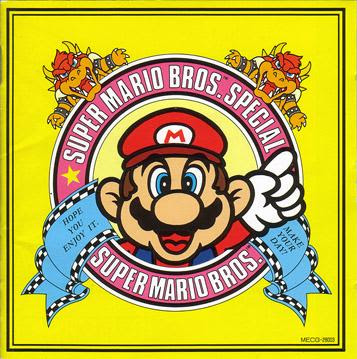
Yeah, we’re talking about this little number again. Released only in Japan by Hudson Soft for two home computers of the early 80’s, the NEC PC-88 and the Sharp X1, Super Mario Bros. Special was one of two offshoots of the original Super Mario Bros and was published only a short time after what would be called The Lost Levels outside Japan. And unlike Lost Levels, which would be exported outside of Japan in various formats and became the “Game B (Hard Mode)” of the Game and Watch Super Mario Bros unit created to celebrate Mario’s 35th Anniversary, Special remained pretty much entirely unknown to the rest of the world and was stunk in legal limbo due to the awkward circumstances of its release (being on two obscure Japanese-only computers and Nintendo only licensing the game instead of taking part in its creation).

When Special was first discovered and gained traction in the regions that originally didn’t get the game towards the back half of the 2000’s thanks to the internet, it would gather a very divided opinion, a fate that also fell over the Lost Levels but for different reasons. The PC-88 version was lambasted on first impressions for its very garish and limited color palette, leaning heavily on red and orange tiles against a harsh blue backdrop for outdoor and castle levels. The Sharp X1 version, by contrast, was able to make use of a greater range of color and had something of a warmer reception but it still felt like a step down from the NES original even with some enemies using more colors than they could on the NES. Both versions would also gain criticism for their poor controls and physics, inconsistent speeds, and the lack of proper scrolling. Whenever these color choices, in particular those of the the PC-88 version, were done for compatibility or performance, they were a far cry from the original color scheme of Super Mario Bros.


Players that were willing to hop in and brave the less than desirable aesthetics came across a very unique experience unlike SMB1 or The Lost Levels. With more creative uses of SMB1’s assets, new secret items to discover, and a few more surprises in the level designs, Hudson Soft would create a very unique and often overlooked take on Nintendo's flagship title of 1985. That said, many design choices and limitations would drag down the overall experience, especially compared to the timeless status of the original game it was based on, implying the game may have been rushed to some extent:

  • Despite the “Bros” moniker, there is no option to play as Luigi, either through two player mode or a character select.
  • As noted above, the PC-88 version only uses 4 colors total, half of the 8 colors the system can display at a time (not including dithering effects) and looks too garish for its own good, even if I do un-ironically prefer it to the more colorful Sharp X1 version. It relies too heavily on reds and oranges, even if the sprites and tiles would be capable of using olive, a color much closer to the many greens and browns in SMB1’s palette.
  • The Japanese computers the game released on were not capable of the same kind of smooth scrolling you could get on the Famicom or NES. A form of scrolling is possible on both machines, but it’s a very choppy tile by tile scrolling. Maybe it would have been preferable to the screen flip-scrolling but it would still not be the ideal and smooth scroll type you would want in a side scrolling platformer (at least one designed with the NES in mind).
  • Some of the levels in the later half of the game look or play too close to levels from vanilla SMB1 and don’t go as crazy with the reduced limitations of the layouts and set pieces of the format as they could have. 5-4 is a loose translation of SMB1 2-4 and 5-4, 6-1 is mostly copied from SMB1’s version of the same level, as is 6-2, and 7-1 hits similar beats as SMB1’s version aside from the unique bonus rooms and the end-level staircase. Compare this to the likes of the first two castles which have bonus rooms set underground and in the overworld, 3-1 featuring underwater tiles in an overworld level, and 4-2 having two entrances to its underground section and an Easter egg if one jumps the flagpole.
  • The new powerups are very well-hidden with almost no hints to their locations and are very seldom-used with only one or two appearances per powerup. Except for the hammer and clock, they are not placed in spots where they would be useful.
  • For years, the PC-88 version was plagued with being run on a “bad dump” that blanked out the screen as it loads in the next part of the current level, making it harder to anticipate oncoming terrain. This bad dump also resulted in the infamous “IPL Switch” that locked you out of the final level.
  • The fourth world in particular was victim to some oversights that would result in soft locks: 4-2 had a nonfunctional Warp Zone, and 4-3 had platforms mandatory to progress that would not load in due to the game being overloaded on platforms on the current screen and— perhaps even more infamously, a bonus room with a broken exit.

In the years since I made my initial post on Super Mario Bros. Special, more people would discover the game and expose it to an even wider audience, though it pretty much remained relevant only to bigger Mario/SMB1 fans, emulation communities, and collectors and enthusiasts of rarer consoles and home computers. With the circumstances around its release preventing Nintendo from bringing it back on current-generation hardware, it remained an oddity that those outside of Japan would only get to experience through emulation. It wouldn’t be until 2022, 12 years after I first heard of and played Special, that I had the experience of playing the game on one of the two computers it originally released for.


Yup, your eyes do not deceive you; what you see in front of your very eyes is in fact a real, working Sharp X1 at last year’s Long Island Retro Gaming Expo. And the game was still as sluggish to play on real hardware as it is on emulators. The overly blurry CRT monitor does miraculously make the graphics and colors look nicer overall, but it didn’t make me want to rush out and buy a whole Sharp X1 computer and a copy of the game when I can get a similar experience on emulators without having to invest a stupidly huge amount of money. Especially when the game and its associated machine were never released in the US to begin with. When the setup returned a year later at LIRetro 2023, the monitor had to be swapped out, resulting in a darker and muddier screen than before (with the only positive being that it completely masks any dithering on screen, almost). Ironically, a homebrew port of SMB1 on the Commodore 64 (video here), which was also being demoed at the same event on real hardware, was capable of fully replicating the feel and speed of the original NES game with only minimal slowdown and none of the chop-style scrolling that plagued both the PC-88 and Sharp X1 versions of Special.

Since discovering Super Mario Bros. Special for the first time in around 2010 or so, I randomly decided to remake the entire thing in Mario Builder, a very old Super Mario Maker precursor of sorts, in order to make the levels of Special playable in a better engine. Unfortunately, Mario Builder was filled with minor and major glitches and a large plethora of nonexistent QoL features to make making levels and full games easier, causing me to abandon the “Restoration Project” after only one level, World 1-1, was made. It was probably not worth it anyways in the long run since Mario Builder's physics were kind of messy and it was not possible to change the game's assets to resemble NES SMB1, meaning had the project gotten made, there would be an extreme artstyle clash with 16-bit SMB3 graphics in 8-Bit SMB1 levels, and the Bowser encounters would have just been the Koopalings on the Bowser Bridge in the first seven worlds followed by Bowser himself destroying himself by smashing the bridge.


Before my original decision to remake Special in the Restoration Project, and part of what inspired me to start it in the first place, was a level hack of the original Super Mario Bros. in 2008 that converts the levels to match Special’s layouts, leading to what would start a trend of modern remakes or remasters across the 2010’s and even into the 2020’s, as we’ll see later. The 2008 NES mod, by Frantik and Levi “Karatorian” Aho, was stock SMB1 programing and level design limitations, leading to many of the unique attributes of Special’s levels that wouldn’t be possible on the NES/FDS being excluded and the broken warps in World 4 being kept intact, but it would be the first time the levels would be playable outside their original platforms, even if they weren’t presented in the same way.

In 2012, Stabyourself’s Mari0, the SMB1 fan game that gives you a portal gun, was released, and one of the earliest map pack projects following up from a port of Lost Levels was a full conversion of Special. It was a collaborative effort, with eight users chosen to convert one of the eight worlds each and send them in to be checked for authenticity and accuracy, with yours truly being one of the project’s leaders. The final result was a very close remake of the levels of SMB Special, but with some small changes to take into account the heavier gravity of jumps, lack of Special’s enemies/items, and other limitations of Mari0’s level design formats. Unlike most of the projects that would aim to recreate Special, the Mari0 conversion allowed one to experience both the PC-88 and Sharp X1 versions, compared to most of these recreations that would take the X1 version’s graphics and visuals over the PC-88 version thanks to its better-utilized and versatile color palette.


The following year, all of Super Mario Bros. Special would be added to Exploding Rabbit’s Super Mario Bros. Crossover starting from Version 3.0, alongside the Lost Levels. This version was based on the Sharp X1 version and included matching Sharp X1 skins for every featured character, including Luigi, finally letting one play as Mario’s brother with his Lost Levels physics in the Super Mario Bros. Special levels proper. As part of the new difficulty system, Easy and Hard versions of Super Mario Bros. Special’s levels were created, featuring new and imaginative takes on Special’s levels to ease up on some difficult aspects of the original or provided a “What If” if Hudson Soft decided to make Special as hard as many people describe The Lost Levels.


By 2015, Nintendo would launch its own Mario level editor with Super Mario Maker, and in no time flat, Special’s levels would be recreated for it by a dedicated user named Forteblast. While it’s not without its own inaccuracies to the source material given the whole point of the editor is to be accessible to anyone interested in designing Mario levels, it does a pretty good job, even if it has to get creative with replicating the new enemies, like placing a Spiny on a Koopa Paratroopa to mimic the Fighter Fly, or placing a Spiny upside-down in a tiny alcove in the ceiling to replicate the icicles. When Super Mario Maker 2 launched, it too got a few Special ports, although from my understanding and from what I’ve seen online they don’t match the first game’s ports and weren’t created by Forteblast.


To my absolute shock, Frantik, one of the creators behind the NES port from 2008, would return to give the NES port a full overhaul in 2021. Dubbed the “35th Anniversary Edition”, this version set out to give the NES a truer-to-the-text conversion of the Sharp X1 version, resulting in a more accurate port with all the original Special-exclusive enemies and items intact, (almost) all of the unique level design elements not seen in the original game or Lost Levels preserved, and the ability to switch the game’s palette between a custom recreation of the Sharp X1’s color palette (which is what you see on the left) and the original NES color palette. The full credit scroll ending of Special is even included, now completely proofread and error-free with accurate translations of the Japanese enemy names. The only feature I would consider missing from this new version of Special on NES would be Luigi, either as a second player option or an alternate choice with different physics. Sure it’s accurate to the original not to feature him, but it would have been appreciated to have him featured in some form as a neat extra, especially since you could play as Luigi in SMB’s Crossover’s conversion of Special, as well as in Lost Levels, the true sequel to SMB1 (at least in Japan).


And that’s where SMB Special stands today. Despite the best efforts of the team at Hudson to create a SMB1-like experience for home computers (a trait that would continue well into the 90’s on MS-DOS computers), Special never really took off and mostly remained a curiosity at best, killing Hudson’s brief partnership with Nintendo to bring their NES and arcade hits to Japanese computers. The PC-88 and Sharp X1 continued on without any presence of Nintendo, getting successors in the form of the PC-98 and Sharp X68000 respectively. Hudson would jump ship to home consoles once the PC Engine launched in Japan, leaving the PC scene behind aside from a few odd releases until they would get bought out and absorbed into Konami at the beginning of the 2010’s. Nowadays, and with no word or possibility of an official re-release, people would keep Special alive through gameplay footage on Youtube and by porting the game’s levels into games/engines that are more adept at handling the fast-paced platforming of Nintendo’s original Super Mario Bros, allowing those new to discovering Special and its history to experience the definitive version of Hudson Soft’s take on the Super Mario Bros. formula.


If you want to see a more in-depth look at Super Mario Bros. Special, I strongly recommend this Basement Dwellers video, since it encouraged me to go and finish up this blogpost and provided a lot of interesting and useful information regarding the game and why many of its design choices were made.

Wednesday, August 23, 2023

Conventions of 2023: Long Island Retro Gaming Expo 2023


For the length of... one year, retro game fans across the area have been waiting patiently for the triumphant return of the Long Island Retro Gaming Expo at the Cradle of Aviation. As it is currently the only game convention among the lineup of main events I attend yearly, I was quite eagerly excited myself, so much so that I decided to attend not one, but two days worth of the event. While traditionally a two-day event in the 2010’s, a third day was added for the expo’s return in 2022, featuring shorter hours and a limited number of activities on Friday. For 2023, Friday was expanded into a full proper Day 1 for the event, albeit only with afternoon hours from 4 to 10 PM.


The event kept the same presentation with a few small additions, changes, and expansions taking place across the expo’s three floors. Entering the convention, attendees are placed in the middle of the vendor’s area, which expands out into the back next to the cafeteria. Here, one can purchase game consoles and their associated games, along with gaming-themed merchandise of both official and homemade varieties. There were a few artists present, but as the event has historically favored vendors over artists, the amount of the latter can be counted on a single hand. As much as I like artist alleys and cute the lack of one as one of LIRetro’s missteps, the venue clearly isn’t big enough to have all the vendors it wants to have alongside a full, feature-rich artist alley. That, and Long Island has no shortage of events with healthy and thriving artist alleys, considering the likes of CradleCon and EternalCon. The vendors were open from the start of each day till 7, and everything would be covered in tarp and closed up.


The various consoles, arcade games, and computer games all returned, and were available for all of each day until closing time. The console timeline exhibit on the second floor got a few new machines, most notably the Wii U at the very end as the only machine of the 2010’s. I’m certain the 3DS would have joined it if they could secure a good unit to demo live, and by next year the base PS4 and original Xbox One will be 10 years old, giving them a fair shot at becoming the tail end the timeline as well. The selection of console games to play outside of the timeline exhibit was pretty strong, bigger than last year’s even, and this time the games were put into themed categories (i.e. platformer games, fighting games, racing games, and… art games) complete with standees describing each game and its history. Even a few Game Boys with Game Boy Cameras/Printers set up, letting attendees take selfies in 4-color greyscale monochrome and print them out on the accompanying printers. The arcade machines were, once again, spread into two different arcades on two different floors. The first floor arcade was mostly 90’s and some 2000’s titles set up into candy cabinets, mainly one-on-one fighting games and SHMUPs, though there were also a small collection of modern rhythm games set up and a few pinball machines were lined up for people to play (sadly only six, but what can you do when they’re kind of hard to transport and take up a lot of space). The second floor’s arcade didn’t change much from last year and featured the same focus towards earlier arcade titles, including the legendary Computer Space, but still had a very solid lineup of machines. Not all of the arcade games in this part of the venue were in the best condition—some of the monitors didn’t look all that great for example, but they were all CRT’s and modified to support free play through a button placed somewhere on the machine. And finally, all the way up on the third floor was a whole area dedicated to the history of Tetris, with many variants that were released over the 80’s and 90’s being open for all to experience.


For the rest of the free play areas, the classic PC gaming section returned, once again including some of the most notable PC and DOS titles of the 90’s and early 2000’s for people to play on. There was a free-play PC set up to house a collection of Windows games, letting one experience the look of a Windows 98 desktop and play games that weren’t able to get their own stations in the section. And for those that wanted to experience multiplayer games over good-old LAN, attendees could play nine-player Quake III Arena or OG Unreal Tournament all at the same time. It was a great lineup, perfect for anyone that grew up with consoles to see what people were experiencing on computers, considering retro gaming these days is usually more closely routed with consoles than computers. There was even a PC set up and decorated with Barbie Fashion Designer; obviously a tie in with the Barbie film that recently hit theaters a few weeks prior but it was a great look into one of the most significant and memorable pieces of software released for computers. Opposite of the PC freeplay section was the return of the Museum, a section housing rare and “exotic” consoles and computers. This year, many more machines joined the Museum, some with a rotating selection of games (like the Sharp X68k and the Commodore Amiga, which both swapped out games every half-hour). Many through not all of the machines also included their own standees going into the background history of all these different machines not commonly seen in the current era, or in the USA for that matter. One of the new rooms the Museum expanded into was sort of empty, but when you only have so many computers available to demo in a public space, you’ll understandably run out machines. As someone that always likes seeing the odd and obscure of the video game landscape, the Museum was a treat, and I’m looking forward to see it get bigger and better in the next few years.


So now that I gave you all a run down of the layout and some of the things you can experience at the event, let’s discuss the various activities of Long Island Retro Gaming Expo. Like any good convention, there were panels and guests all over the conventions, spread out into two panel rooms and some booths in the vendors respectively. I was only able to attend one, and the other panel I wanted to attend was sadly timed out in a way that I would miss something I singed up for—more on that later. Music performances once again occurred on the second floor next to the timeline exhibit, and thankfully they never accumulated any large oversized crowds of spectators clogging the area, even towards Saturday night when most of the rest of the event was closed up for the night and the third and final music guest performed at 8PM. It was still kind of loud, but the audio wasn’t blasting across the main area of the expo as it did in years prior. The indie gaming section returned, offering up free demos of indie titles as well as boxed copies of both modern and retro consoles. The NES Maker booth also returned, and new to the convention was Opcode, a group dedicated to keeping Coleco’s ColecoVision console alive through new hardware that expands its memory and lets it play new aftermarket games and arcade ports. I would have purchased one, but my ColecoVision is currently on standby for various reasons. Back down near the museum, there was the “Pokélab” (Pocket Lab), where if you brought an old-generation Pokémon title to the Expo, you could acquire various old and long-gone event Pokémon from past distributions up to the end of Generation V. It wasn’t every event distribution up to that point, and I didn’t feel like digging out my old carts, but if you have an old Pokemon game and missed these event distributions back then, this would be a good opportunity to acquire them again. That said the only thing that felt like it was missing from the Pokélab was a Celebi distribution for the Generation II games. With most of the other games covered, I’m surprised that was left out, but maybe there was no time to get one prepped and ready for the event?


Now where was I? Oh right, competitions. Like last year, many classic games were part of tournaments or other competitions. A slew of classic and modern fighting game brackets were held on the same grounds as the main first-floor freeplay area, along with a few other competitive multiplayer games that weren’t all head-to-head brawlers. Racing games, sports games, and even some puzzle and rhythm games had full tournaments ran. And to ensure even the younger attendees could get in on the competitive fun, various “Kid’s Tournaments” were held. Numerous High Score challenges were held for various other classic games that did not feature direct head-to-head gameplay; players were free to enter as they wish and try to go for the best score or time on a particular retro title, taking turns with other contestants to grind out for the best score possible. For me, one of the standout attractions for the competitive-minded was the EON Gaming section, including full 16-player LAN lobbies for Halo 2 and Mario Kart: Double Dash. While the PC LAN games in the PC game section let players drop in and out freely, players were required to sign up on a list for these, and were then assigned stations and put into teams if they didn’t have a squad lined up. Since I wanted to try my hand at 16-player Mario Kart, I signed up and got accepted into the very last shift of the day at 6:30 PM. With me as the driver and my teammate as the one throwing items and assisting with drifting, I channeled forth my skills at kart racing and led us to victory, scoring the most points out of every participant and getting to pose with the gold trophy. I didn’t get to keep the trophy, but it was nice to win at another competition at LIRetro, even if I didn’t necessarily aim to win, just place good overall and enjoy the experience since I won’t have another chance to play a massive 16-player session of Double Dash until next year.


And with that, that’s pretty much how Long Island Retro Gaming Expo 2023 went. I met lots of new people, played and learned about some new games to check out in my free time, and came home with a big smile on my face and a huge desire to come back the following year. LIRetro 2023 sits comfortably aside Castle Point Anime Expo as part of my top 2 favorite events of the year, and after the following week’s Long Island Tropic Con, it’s safe to say that I can finally take a well-deserved rest until October and enjoy all of what’s left of the summer season. In terms of what could be improved, there isn’t really much I’d say needs improving besides what comes up first in my mind: More games in the arcade and freeplay areas (mainly to fill in some empty spots in the venue, especially in the PC Freeplay and Museum sections), more vendors with maybe a small artist’s alley somewhere in the building if enough artists were to sign up, and maybe for Saturday, an evening panel or two for those attending the convention towards the end of the day. These are all very minor points and even if the game section only changed a small bit, I would still come back the following year for the premiere retro-gaming event of the
area.


And it looks like I’ve finally ran out of stuff to say about LIRetro 2023. Sorry that activity outside of these event coverages has been light and dry around social media and such; on top of wanting to enjoy the summer until it becomes too cold out, I’ve been going through some rough times and an internal re-structuring of sorts and figuring out what projects to make a priority, along with finishing up what I already started and steadily develop the world (and theoretical video games) of Aozora’s Adventure and the big cast of characters that inhabit it. I’ll likely make a follow up post sometime soon in September or October going into greater detail for my plans for the rest of 2023 and going into 2024. Until then, I’ll be taking a well-deserved hero’s rest until I re-awaken for New York Comic Con this October.